How Much Money Is Your Restaurant Losing From Missed Phone Calls?
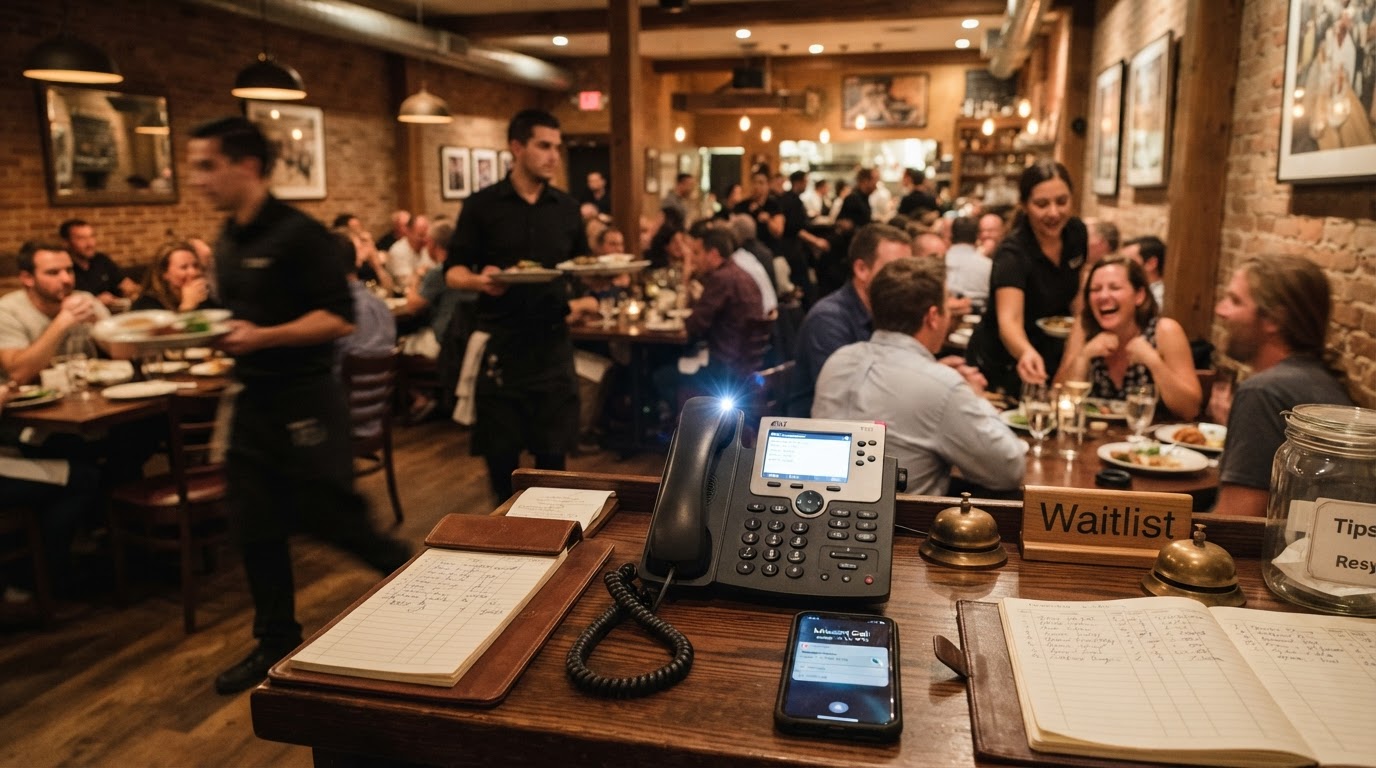
Picture this.
It's Friday night. Your restaurant is packed. Your employees are helping customers, taking orders, and trying to keep everything running smoothly.
Meanwhile, your phone is ringing.
Nobody answers.
The customer tries again. Still nothing.
After another attempt, they give up and call a different restaurant.
You might never know that customer existed. You won't see an abandoned online order or an unfinished reservation. All you'll see is another missed call.
And that's exactly why restaurant missed calls can be such an expensive problem for restaurant owners.
At Sales Spike, I work with restaurants to help them bring customers back, improve their online presence, generate more Google reviews, and avoid losing potential customers when nobody can answer the phone.
One of the simplest systems I implement is automated missed-call text-back.
Here's why it matters and how to figure out what missed calls might be costing your restaurant.
Why Do Restaurants Miss So Many Phone Calls?
Most restaurant employees aren't deliberately ignoring the phone.
They're busy.
Your front-of-house staff might be helping a customer pay, answering questions about the menu, or seating a family. Your kitchen might be backed up with orders. Sometimes, the phone line is already occupied.
A restaurant can have excellent employees and still miss calls.
The problem is that the person calling doesn't necessarily understand what's happening inside the restaurant.
They don't know whether you're understaffed, busy taking another order, or helping someone at the counter.
All they know is that nobody answered.
In my experience working with restaurants, a business might miss approximately 20 to 50 phone calls per month, depending on its volume, whether it accepts phone orders, and whether customers call for reservations.
That's an experience-based estimate, not an industry-wide average. Your restaurant's actual number could be lower or significantly higher.
The important question is what happens to those callers afterward.
What Happens When a Restaurant Doesn't Answer the Phone?
Think about how you behave when you're hungry and trying to order food.
You call a restaurant.
Nobody answers.
You might try a second time, maybe even a third.
But eventually, you're going to move on.
You don't want to spend 15 minutes trying to get someone to pick up the phone. You just want to order your food.
For restaurant owners, that means a missed restaurant order isn't necessarily just a missed conversation.
It could be a missed pizza order, a takeout order for an entire family, a reservation, or a customer who wanted to ask whether you were open.
Not every missed call would have turned into a sale. Some callers are vendors, existing customers asking questions, or people who would have ordered online anyway.
But if even a portion of those unanswered calls represent customers ready to spend money, ignoring them becomes an expensive habit.
How Much Revenue Could Your Restaurant Be Losing From Missed Calls?
Let's look at a real example.
One pizza restaurant I worked with recorded approximately 629 missed phone calls over one year.
That's more than 50 missed calls per month on average.
Now imagine the restaurant could recover half of those opportunities.
That would be approximately 315 recovered calls.
If those recovered calls generated an average of roughly $25.40 in additional revenue each, the restaurant could potentially recover around $8,000 in annual revenue.
Here's the breakdown:
| Metric | Example |
|---|---|
| Missed calls in one year | 629 |
| Assumed recovery rate | 50% |
| Potential recovered calls | Approximately 315 |
| Assumed revenue per recovered call | Approximately $25.40 |
| Potential annual revenue | Approximately $8,000 |
Important
The 629 missed calls were recorded. The 50% recovery rate and $8,000 revenue figure are illustrative estimates, not verified recovered sales. Actual results depend on how many calls represent purchase intent, how many customers respond, and how much they spend.
Still, this example demonstrates why missed calls are worth measuring.
If you're running a restaurant, wouldn't you want to know whether you're missing hundreds of potential customer conversations every year?
Calculate Your Restaurant's Potential Missed-Call Revenue
You don't need complicated software to start estimating the opportunity.
Use this simple formula:
Missed calls × estimated percentage recovered × average revenue per recovered call = potential recovered revenue
For example, imagine your restaurant misses 30 calls per month.
If 50% of those callers eventually make a purchase after follow-up, and each recovered call produces an average $30 order:
30 × 50% × $30 = $450 in potential monthly revenue.
Over 12 months, that's $5,400.
But remember: this is a scenario, not a promise.
To create a realistic estimate for your restaurant, track the number of missed calls, which callers actually needed to order or reserve, which customers completed a purchase after follow-up, and the revenue associated with those transactions.
Even a modest number of recovered orders can make missed-call follow-up worth examining.
What Is Automated Missed-Call Text-Back for Restaurants?
Automated missed-call text-back is a simple system that sends a customer a text message when they call your restaurant and nobody answers.
Instead of leaving the caller wondering whether the restaurant is open or whether they should try somewhere else, the system responds immediately.
For example, a customer might receive:
"Hey! Sorry we missed your call. Our line is a little busy right now. If you'd like to place an order, you can order online here: [link]. Otherwise, feel free to call us back in a few minutes!"
For restaurants that accept reservations, the text can include a reservation link.
For restaurants that don't offer online ordering, it can provide the website, relevant information, or an invitation to call again.
The message should match how that particular restaurant operates.
The goal isn't to complicate the customer experience.
It's to make it easier.
What Happens Behind the Scenes?
With Sales Spike's missed-call text-back system, the process is straightforward:
- A customer calls your restaurant.
- The call goes unanswered.
- The system automatically sends the customer a helpful text message.
- The restaurant receives a missed-call notification.
- If needed, an employee or owner can use the app to call that customer back.
The initial message doesn't require someone to stop what they're doing and manually type a response.
Once the system is configured, that part happens automatically.
Staff members can still return calls when appropriate, but the customer isn't left completely in the dark while they're waiting.
Why I Prefer Missed-Call Text-Back Over an AI Receptionist
AI receptionists are becoming more common, and the technology is improving.
But for many restaurants, I prefer a simpler approach.
Think about what most people want when they call a pizza restaurant.
They want to say what they're ordering, hear when it'll be ready, and hang up.
They don't necessarily want to have a long conversation with a voice assistant.
In my experience, some customers become frustrated when an automated voice system takes too long, misunderstands their order, pauses awkwardly, or repeatedly tries to suggest additional items.
That doesn't mean every AI receptionist is bad. Some businesses use them successfully.
But I don't believe every restaurant needs one.
An automated text-back system lets your staff continue answering calls normally while providing a backup for the calls they miss.
The customer can order online, find the information they need, or wait for a real person to call them back.
For restaurants that value quick, straightforward service, that's an alternative worth considering.
Missed-Call Text-Back Does More Than Recover Orders
One of the biggest benefits isn't necessarily an immediate online order.
It's keeping the customer engaged.
Imagine calling a restaurant and hearing the phone ring without an answer.
You might assume nobody is available and decide to go somewhere else.
Now imagine receiving a text seconds later explaining that the line is busy and giving you another way to order.
That's a different experience.
The restaurant has acknowledged your call.
You know someone—or, in this case, an automated system—is responding.
Even if you don't click the ordering link, you might be more willing to wait a few minutes or call back.
That's why I look at missed-call text-back as both a customer service system and a potential revenue recovery system.
You're not just sending a link.
You're giving the customer a reason to continue trying to do business with your restaurant.
Does Missed-Call Text-Back Create More Work for Restaurant Employees?
Not necessarily.
In fact, the system is designed to reduce the need for manual follow-up on every missed call.
Once it's set up, the initial message is automatic.
The restaurant owner or employee can receive a notification saying a call was missed and decide whether a callback is needed.
If the customer uses the online ordering link, the restaurant may not need to return the call at all.
If the customer has a question or wants to speak with someone, a staff member can call them back when available.
That means the system doesn't require your employees to learn an entirely new way of serving customers.
It supports the way they're already working.
Of course, staff still need to handle orders and callbacks when required. Automation doesn't replace those responsibilities.
The Biggest Mistake Restaurant Owners Make With Missed Calls
The biggest mistake isn't necessarily missing the calls in the first place.
It's not doing anything about them.
Every business has bottlenecks.
Restaurants have busy hours, staffing challenges, and operational problems that need attention.
But when you identify a problem that could be costing you customers, you should take action.
That doesn't mean you have to buy my system.
Maybe your solution is hiring another employee during busy hours. Maybe it's improving your online ordering experience. Maybe it's changing how your phone lines work.
Or maybe it's implementing an automated missed-call text-back system.
The important thing is to recognize the problem, measure it, and find a solution that works for your business.
Doing nothing means the same problem can continue month after month.
What Does Sales Spike Offer Restaurants?
At Sales Spike, I focus on helping restaurant owners solve several common problems without making their operations more complicated.
For $249 per month, my core restaurant marketing package includes systems designed to help with four things.
1. Never Miss Another Customer Opportunity From an Unanswered Call
Automated missed-call text-back gives callers another way to reach your restaurant, place an order, or get the information they need. It doesn't prevent every missed call, but it helps make sure those callers aren't simply ignored.
2. Bring Customers Back on Slow Days
I help restaurants build an opted-in customer contact list and send targeted text promotions that encourage previous customers to return. Instead of relying entirely on attracting new customers, restaurants can reach people who already know their food.
3. Get More Google Reviews
Sales Spike helps restaurants consistently request reviews from customers, making it easier to build a stronger online reputation. More genuine customer reviews can help potential diners evaluate your restaurant when they're deciding where to eat.
4. Get a Website Built and Managed for Your Restaurant
I build and manage restaurant websites designed to make important information easy to find, including menus, ordering options, contact information, and reservations where applicable. I also focus on foundational website SEO so search engines can better understand the restaurant and its services.
These systems work together.
Your website helps people find and contact your restaurant. Your review system helps build trust. Your customer retention system gives past customers a reason to come back. And your missed-call text-back system helps when someone calls and nobody can answer.
The goal is to make it easier for customers to choose your restaurant and keep coming back.
Frequently Asked Questions About Restaurant Missed Calls
How many phone calls does a typical restaurant miss per month?
In my experience, some restaurants miss approximately 20–50 calls per month, although the number varies significantly. Restaurants that take many phone orders or reservations may have different call volumes. The best way to find out is to review your own phone records.
How much money can a restaurant lose from missed phone calls?
It depends on how many missed calls represent actual buying opportunities, how many callers would have placed orders, and the average transaction value. For example, 30 missed calls per month with a 50% recovery rate and a $30 average recovered order would represent $450 in potential monthly revenue.
What is missed-call text-back?
Missed-call text-back automatically sends an SMS message to someone who called your business but didn't reach an employee. The message can explain that the restaurant is busy and include an online ordering link, reservation link, or other helpful information.
Does missed-call text-back work for pizza restaurants?
Pizza restaurants are a natural use case because customers often call to place takeout orders or ask questions. An automated message can direct customers to online ordering or encourage them to call back.
Is missed-call text-back better than an AI receptionist?
It depends on the restaurant. AI receptionists can handle certain conversations automatically, while text-back systems provide a simpler response to unanswered calls. Restaurants that prefer human phone service may find text-back a useful backup.
Do employees have to manually send the messages?
No. The initial missed-call message is automated once the system is configured. Employees may still need to return calls or answer customer questions.
Can restaurants automatically send promotional texts to missed callers?
A missed-call service response is not the same as permission to send ongoing marketing messages. Restaurants should obtain appropriate consent before enrolling callers in promotional SMS campaigns, follow applicable messaging rules, and honor opt-outs. The system should be configured accordingly.
How much does Sales Spike cost?
Sales Spike's core restaurant marketing package is $249 per month. It includes missed-call text-back alongside restaurant website services, Google review automation, and customer retention marketing.
Final Thoughts: Stop Ignoring Missed Phone Calls
If you own a restaurant and you're missing phone calls, I think you should take that seriously.
You work hard to get customers through the door. You spend money on ingredients, employees, rent, and marketing.
It doesn't make sense to ignore a potential customer simply because nobody was available to answer the phone.
You don't necessarily need an expensive AI receptionist or a complicated new process.
Sometimes, a simple automated text message is enough to give that customer another way to place an order or reach your restaurant.
At Sales Spike, I offer that system alongside restaurant websites, Google review automation, and customer retention marketing for $249 per month.
If you want to see how it works for your restaurant, I'd be happy to show you.
See How Sales Spike Works
Recover missed calls, bring customers back on slow days, get more Google reviews, and get a website built and managed for your restaurant — all for $249 per month.
Keep Reading
What Happens When Your Restaurant Misses a Phone Call During the Dinner Rush?
July 12, 2026
How to Bring Customers Back to Your Restaurant: 7 Proven Strategies
October 14, 2026
The 3 Most Important Marketing Systems Every Restaurant Needs
September 29, 2026
Want to see all of these systems working together? Read about the 3 most important marketing systems every restaurant needs, or visit our Sales Spike pricing page to see what's included for $249 per month.