How to Bring Customers Back to Your Restaurant: 7 Proven Strategies
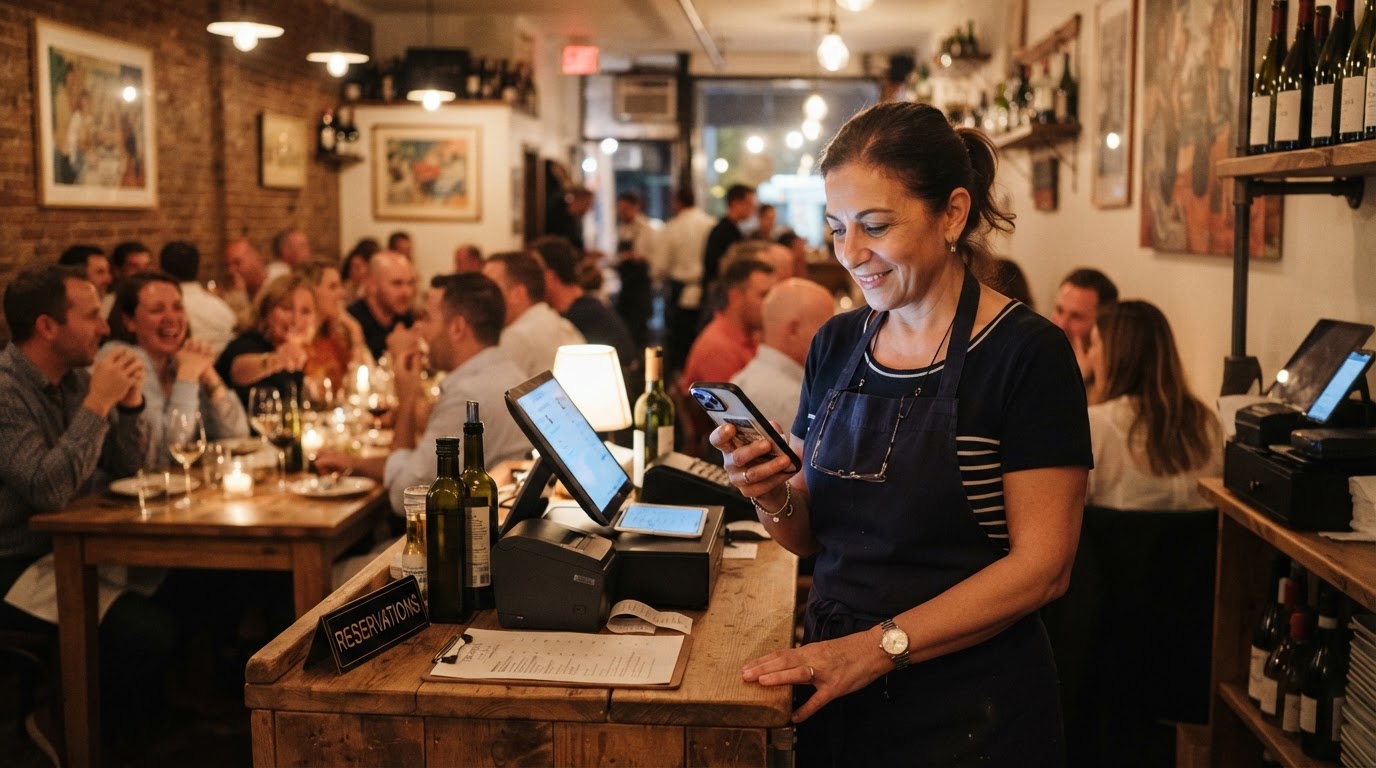
Getting someone to visit your restaurant for the first time is only half the battle.
The real opportunity is getting that customer to come back again.
Restaurant owners spend thousands of dollars on advertising, social media, influencers, and promotions to attract new customers. But there's one question that often gets overlooked:
What are you doing to bring back the customers who have already eaten at your restaurant?
I'm Dino, founder of Sales Spike. I help restaurants build systems that bring customers back, especially on their slowest days.
And after working with restaurant owners, I've learned something important.
Most customers don't stop visiting your restaurant because they hated the food.
They don't necessarily leave because the service was bad.
And they don't always disappear because they found somewhere better.
A lot of customers simply forget about you.
That's why one of the most important things a restaurant can do is build a way to reconnect with its previous customers.
Here are seven strategies I recommend.
1. Understand Why Restaurant Customers Don't Come Back
Imagine someone visits your restaurant for the first time.
They love the food.
The service is excellent.
They enjoy the atmosphere.
They leave thinking they had a great experience.
But then life happens.
They go back to work, make plans with friends, try another restaurant, or simply get busy.
A few weeks pass.
Then a few months.
Eventually, they forget about your restaurant.
Not because they disliked it.
Because you never gave them another reason to think about it.
This is one of the biggest problems I see in restaurant marketing.
Restaurant owners work hard to create a great customer experience, but once customers leave, the business has no reliable way to reach them again.
You can have amazing food and excellent service, but that doesn't automatically mean customers will remember to return.
That's why restaurants need a customer retention system.
Not just a way to attract new people.
A way to reconnect with the people who already know and enjoy the business.
2. Build Your Own Restaurant Customer List
If I could recommend one thing every restaurant owner should start doing today, it would be this:
Start collecting your customers' contact information, with their permission.
Think about it.
You could have 100 customers walk through your doors today.
If none of them joins your customer list, how will you reach them next week?
You might post a special on Instagram.
You might run a Facebook advertisement.
You might hope they remember your restaurant.
But none of those methods guarantees that your previous customers will see your message.
Now imagine having a list of 2,000 customers who have opted in to receive your restaurant's offers.
When Tuesday is slow, you have a direct way to invite some of those customers back.
That's a completely different position to be in.
How do restaurants collect customer phone numbers?
My philosophy is simple:
The easier you make it, the more likely customers are to participate.
One method is a text-to-join promotion.
For example:
"Text PIZZA to this number to get 20% off your next order."
Or:
"Text WINGS to this number to claim a special offer."
The customer doesn't need to download an app or fill out a long form.
They can initiate the process from their own phone.
Another method is an automated text-back system.
Sales Spike can help restaurants set up automated follow-up messages for qualifying customer calls, including missed calls.
For example, a customer might receive a message offering an incentive and inviting them to join the restaurant's VIP text club.
The system can collect their response and record their consent.
Important: Customers must receive clear marketing consent disclosures before subscribing. Texting a keyword, making a call, or replying YES does not automatically authorize ongoing promotional messages unless the opt-in process includes the required disclosures and consent.
Restaurants should also provide an easy way to unsubscribe.
The objective is to build a list of customers who genuinely want to hear from the restaurant.
Not to send unwanted messages.
3. Use SMS Marketing to Bring Customers Back
Once you have a customer list, you need a way to use it.
My favorite strategy is targeted SMS marketing.
Why?
Because it gives restaurants a direct way to communicate with customers who have already shown interest in their business.
Instead of hoping someone sees an Instagram post, you can send an offer to a selected group of opted-in customers.
And unlike many broad marketing campaigns, SMS promotions can be designed to measure results.
For example, you can send customers a unique offer and track how many redeem it.
You can compare different promotions.
You can see which days generate the strongest response.
And you can improve your campaigns over time.
Real example: Perry's Pizza
One of the strongest results I've seen came from Perry's Pizza in Huntington Beach, California.
At the time, the restaurant had built a customer list of approximately 1,600 contacts.
We ran a promotion:
Buy a large pizza, get a medium pizza free.
The result?
Approximately 40 customers came in on a single day to take advantage of the offer.
The restaurant sold out of pizza, and customers were still calling about the promotion.
That's what can happen when a restaurant combines an established customer list with an offer that motivates people to visit.
Now, that doesn't mean every restaurant will get 40 customers from one text campaign.
Results depend on the size and quality of the customer list, the offer, timing, customer demand, and other factors.
But this example demonstrates the opportunity.
Those were customers the restaurant could reach directly rather than relying entirely on new advertising.
4. Don't Overwhelm Your Customers With Text Messages
Here's something I tell restaurant owners:
With great power comes great responsibility.
Just because you can text your customers doesn't mean you should text them every day.
Nobody wants to receive constant promotional messages.
In fact, sending too many messages can encourage customers to unsubscribe.
My personal recommendation is to start with approximately one promotional text per customer per month.
That doesn't mean the restaurant can only run one promotion each month.
It means you can divide your list into different groups.
For example, imagine you have 2,000 opted-in customers.
Instead of texting all 2,000 every Tuesday, you could divide them into four groups of 500.
You might send a Tuesday promotion to the first group during week one.
The following Tuesday, send an offer to the second group.
Continue rotating through the list.
That way, you're consistently inviting customers back without sending the same person a promotion every week.
What's the best time to send restaurant marketing texts?
I generally like sending promotional messages around 10:30 AM.
Here's my reasoning.
At that time, many customers haven't finalized their lunch or dinner plans.
If you send them a compelling offer early enough, your restaurant has an opportunity to become part of their plans.
This is my preferred starting point, not a universal rule.
Different restaurants should test different times and evaluate their own results.
Also, always respect applicable texting hours, customer preferences, and marketing consent requirements.
The goal isn't to send more messages.
It's to send the right message to the right customer at the right time.
5. Create Offers Customers Actually Want
Restaurant owners frequently ask me:
"What's the best discount to bring customers back?"
My answer is that it depends on the restaurant.
Every restaurant has different customers.
Different food costs.
Different profit margins.
And different products people love.
Some restaurants might do well with a buy-one-get-one promotion.
Others might offer a free appetizer.
Some might use 20% off.
Others might create a limited-time special on a popular menu item.
The restaurant owner knows their customers and costs better than anyone.
That's why I recommend testing offers rather than assuming one promotion will work everywhere.
Make the offer worth leaving the house for
Here's the important part.
If your restaurant is genuinely struggling to get customers through the door on a Tuesday, you need to give people a compelling reason to come in.
A small discount might not be enough.
But a well-designed offer on a popular menu item could get their attention.
Think about Perry's Pizza.
Buying a large pizza and receiving a medium pizza free was an attractive offer for customers.
The restaurant understood its food costs and decided the promotion made sense for its business.
That's the kind of thinking I encourage.
Don't just offer a discount because everyone else is doing it.
Create an offer that customers value and that the restaurant can afford to fulfill.
Then track the results.
Look at redemptions, average order values, food costs, and whether the campaign generated profitable sales.
Keep testing until you find what works.
6. Use Your Customer List to Fill Slow Restaurant Days
Every restaurant has slow periods.
Maybe it's Monday.
Maybe it's Tuesday.
Maybe it's Wednesday afternoon.
The specific day doesn't matter.
What matters is having a strategy for those slower periods.
Here's how I would approach it.
Step 1: Build your customer list
Before you can run effective retention campaigns, you need people who have agreed to hear from you.
Start collecting contacts consistently.
Make it easy for customers to join.
Train your employees to explain the offer.
Step 2: Identify your slowest days
Look at your sales data.
Which days consistently generate less revenue?
Which times have unused capacity?
Those are the periods you want to focus on.
Step 3: Choose a compelling offer
Select an item or promotion your customers will find valuable.
Make sure the restaurant can afford the offer and handle the expected demand.
Step 4: Send a targeted campaign
Choose a segment of your opted-in customer list.
Send a clear message explaining the offer, when it's available, and how customers can redeem it.
Step 5: Track the results
Measure how many people redeem the promotion.
Look at the revenue generated.
Compare the results against the cost of the offer.
Step 6: Improve your next campaign
If the promotion works, learn from it.
If it doesn't, try a different offer, audience, or time.
Restaurant marketing is a process of testing and improving.
Why the size of your list matters
It's a numbers game.
A restaurant with 100 opted-in contacts has fewer opportunities to reach customers than a restaurant with 2,000 engaged contacts, all else being equal.
A larger list doesn't guarantee results.
But it gives the restaurant more people it can invite back.
That's why building the list consistently is so important. Read more about how to get more customers on slow days.
7. Stop Relying Only on Social Media to Bring Customers Back
I see restaurants posting promotional flyers on Instagram all the time.
Some are well designed.
Some are made with AI.
And there's nothing inherently wrong with either approach.
But here's the problem.
A lot of restaurants are using similar-looking promotional graphics.
When every post looks the same, it's harder to stand out.
More importantly, posting a special doesn't mean your previous customers will see it.
You could have hundreds of loyal customers who don't see your latest Instagram post.
Maybe they aren't online that day.
Maybe the platform doesn't show them the post.
Maybe they scroll right past it.
That's why I don't recommend relying on organic social media alone to bring customers back.
Social media can be useful for attracting attention, showing off your food, and building your restaurant's brand.
But your opted-in customer list serves a different purpose.
It gives you a direct channel to communicate with people who have already visited or expressed interest in your restaurant.
My perspective is that text marketing could become an increasingly important customer relationship channel for restaurants over the coming years.
Not because it replaces social media.
But because it helps restaurants build relationships they can manage more directly.
How Long Does It Take to Build a Restaurant Customer List?
One of the most common questions I hear is:
"How many customers will I have on my list after 30 days?"
Here's my answer.
I can't promise you a specific number.
Every restaurant is different.
Some restaurants have more foot traffic.
Some have more engaged employees.
Some offer stronger signup incentives.
And some already have customers who are eager to join a VIP club.
But I can share examples from restaurants I've worked with.
Perry's Pizza: Approximately 2,000 contacts in one year
Perry's Pizza built a list of approximately 2,000 contacts over its first year.
That list became an asset the restaurant could use for future promotions.
My Place Sports Bar and Grill: Approximately 1,500 contacts in six months
My Place Sports Bar and Grill built a list of approximately 1,500 contacts in six months.
That gave the restaurant a growing audience for future marketing campaigns.
These are individual client examples, not guarantees or typical results.
Your employees matter
One thing restaurant owners need to understand is that the system and the staff work together.
If your employees never mention the VIP club, fewer customers may sign up.
If your offer isn't compelling, fewer customers may participate.
If you don't promote the signup opportunity, growth may be slower.
Automation can reduce the work involved in collecting and managing contacts.
But the restaurant still needs to participate.
Over time, a well-maintained list can become more valuable as new customers opt in.
Of course, lists also require maintenance because customers can unsubscribe, change numbers, or stop engaging.
The objective is to build a healthy, permission-based customer audience.
How Sales Spike Helps Restaurants Bring Customers Back
I started Sales Spike to help restaurant owners put practical marketing systems in place without having to manage everything manually.
One of the biggest parts of that is customer retention.
Sales Spike helps restaurants establish systems for:
Building a customer list
Create simple ways for customers to join a restaurant's VIP list, including text-to-join campaigns and automated opt-in workflows.
Automated text-back
Set up automated responses to qualifying calls, including missed calls, so restaurants can reconnect with callers and invite them to join their marketing list when appropriate.
Targeted SMS promotions
Reach opted-in customers with offers designed to encourage return visits, especially during slow periods.
Measuring campaign results
Track campaign activity and customer redemptions so restaurant owners can better understand what's working.
Ongoing guidance
Help restaurant owners build and improve their customer retention process over time.
I don't believe a restaurant should expect everything to change overnight.
Rome wasn't built in a day.
Building a successful restaurant takes time.
Building word of mouth takes time.
And building a customer list that consistently supports repeat business takes time, too.
That's why I want Sales Spike to be a long-term partner for restaurant owners.
The goal isn't to run one promotion and disappear.
The goal is to help you build a system that keeps giving customers reasons to come back.
You can see the full breakdown of what's included on our Sales Spike pricing page.
Frequently Asked Questions About Bringing Restaurant Customers Back
What is the best way to bring customers back to my restaurant?
One effective strategy is to build an opted-in customer list and send targeted promotions that encourage previous customers to return. SMS marketing can be especially useful because it provides a direct communication channel and allows restaurants to track redemptions.
How do I get more repeat customers at my restaurant?
Focus on providing a great customer experience, collecting customer contact information with permission, creating compelling offers, and staying in touch without overwhelming customers.
How often should restaurants send marketing texts?
My preferred starting point is approximately one promotional message per customer per month. Restaurants should test frequency based on customer engagement, unsubscribe rates, and campaign results.
What is the best time to text restaurant customers?
I like starting around 10:30 AM because customers may still be planning their meals for the day. However, the best time depends on the restaurant's audience, and testing is important.
What kind of restaurant promotion works best?
There is no single best promotion. Popular options include buy-one-get-one deals, free appetizers, limited-time offers, and percentage discounts. The best offer is one that customers value and that the restaurant can afford.
How can I get more customers on slow Tuesdays and Wednesdays?
Build an opted-in customer list, create a compelling offer for the slow day, send it to an appropriate audience segment, and track how many customers redeem it.
How can I collect restaurant customer phone numbers?
Restaurants can use clearly disclosed text-to-join promotions, QR-code signup forms, and compliant automated opt-in workflows. Customers should understand what messages they'll receive and how to unsubscribe.
Does SMS marketing work for restaurants?
SMS marketing can help restaurants reconnect with customers and promote repeat visits. Results depend on the audience, offer, timing, list quality, and execution.
How long does it take to build a restaurant customer list?
It varies. For example, Perry's Pizza built approximately 2,000 contacts in one year, while My Place Sports Bar and Grill built approximately 1,500 in six months. These examples are not guaranteed outcomes.
Can Sales Spike help automate restaurant customer retention?
Yes. Sales Spike helps restaurants set up customer list building, automated text-back workflows, and targeted SMS campaigns, with ongoing guidance to improve their customer retention process.
Final Thoughts: Start Building Relationships With Your Customers Today
If you're wondering how to bring customers back to your restaurant, start by thinking about what happens after someone leaves.
Do you have a way to contact them again?
Do they know about your upcoming specials?
Can you invite them back when business is slow?
Or are you simply hoping they remember you?
A great customer experience gives people a reason to like your restaurant.
A customer retention system gives you a way to remind them to return.
And when you combine the two, you create more opportunities for repeat business.
You don't need to build a list of thousands of customers overnight.
You just need to start.
Because every customer who willingly joins your list is another person you may be able to reconnect with in the future.
Want to build a system that brings customers back to your restaurant?
I help restaurant owners set up customer retention systems through Sales Spike.
Visit salesspike.ai to learn more.
Related Restaurant Marketing Guides
Why Should Restaurants Build a Customer List They Own?
Learn how restaurants can use QR codes, website forms, and permission-based offers to build a valuable customer list they can contact directly.
How Can Restaurants Use Text Marketing to Bring Customers Back Without Annoying Them?
Learn how restaurants can use permission-based text marketing to bring customers back, promote slow days, and avoid overwhelming their audience.
How Can a Restaurant Turn First-Time Customers Into Regulars?
Learn how restaurants can improve customer retention, grow a permission-based contact list, and encourage more first-time customers to return.
Restaurant Owner Action Checklist
- Start collecting customer phone numbers with proper consent every single day.
- Offer something valuable to each individual customer for joining.
- Send promotions the morning of your slow day so customers can plan around the offer.
- Rotate your audience so no single customer gets blasted every single week.
- Test different offers and keep what actually brings people through the door.