What Restaurant Marketing Actually Brings Customers Back in 2027?
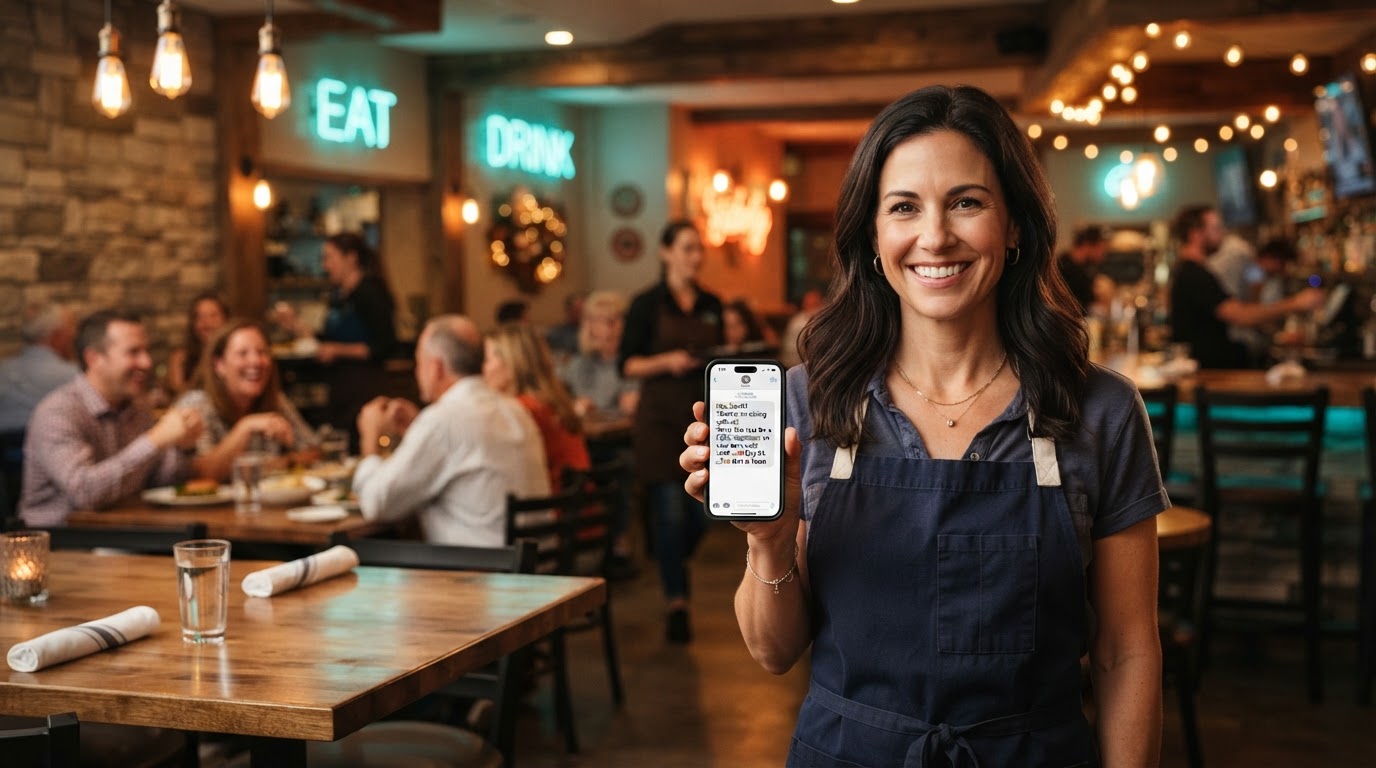
Restaurant owners spend thousands of dollars trying to attract new customers.
They run Facebook ads, post Instagram specials, hire influencers, and promote their restaurants online.
And there's nothing wrong with that.
Attracting new customers is important.
But here's a question every restaurant owner should ask:
What happens after someone visits your restaurant for the first time?
Imagine someone comes in, orders their favorite meal, receives excellent service, and has a 10-out-of-10 experience.
They love the food.
They love the atmosphere.
They tell their friends they had a great time.
Then they leave.
What system do you have in place to bring that customer back?
For many restaurants, the answer is nothing.
They simply hope the customer remembers them.
That's where restaurant SMS marketing comes in.
In 2027, restaurants shouldn't have to depend entirely on social media algorithms or constantly spend money finding new customers.
They should also be building relationships with the customers they've already served.
Here's how.
1. Stop Building the Roof Before the Foundation
Think about building a house.
Would you start with the roof before building the foundation?
Of course not.
But that's exactly what some restaurants do with their marketing.
They spend money attracting new customers before putting the basic systems in place to turn those visitors into repeat customers.
Before spending heavily on advertising, restaurants should have a strong foundation:
- A modern website where customers can easily find the menu, hours, and ordering information.
- A strong online reputation supported by authentic Google reviews.
- A system for following up when customers call and nobody answers.
- A way to stay connected with customers after they leave.
Advertising can help get people through the door.
But what happens after that first visit matters just as much.
A restaurant that attracts customers but has no way to reconnect with them is missing an important part of its marketing strategy.
2. Why Don't Happy Restaurant Customers Always Come Back?
One of the biggest misconceptions in restaurant marketing is that a great experience automatically creates a repeat customer.
It doesn't.
Someone can absolutely love your restaurant and still forget to visit again.
Life gets busy.
They try somewhere new.
They choose a restaurant that's closer to home.
Or they simply don't think about your business when deciding where to eat.
Research supports the importance of actively encouraging return visits.
For example, Toast's restaurant loyalty research reports a 7% return rate among first-time guests in its analyzed baseline without retention interventions.
That doesn't mean every restaurant has a 7% return rate, or that customers who have a perfect experience have a specific probability of returning. Results vary significantly by restaurant, customer, and measurement period.
But it illustrates an important point.
Even a great customer experience doesn't guarantee another visit.
That's why restaurants need a way to remind customers they exist.
And one of the most direct ways to do that is through text messaging.
3. What Is Restaurant SMS Marketing?
SMS marketing is simply using text messages to communicate with customers who have agreed to receive your restaurant's promotional messages.
For example, imagine it's Monday afternoon.
Your restaurant is usually slow on Mondays.
Instead of posting a special on Instagram and hoping people see it, you send a message to your subscribed customers:
"Hey! It's Monday, and we're running a special today. Buy one large pizza and get a small pizza free. Show this text when ordering to redeem!"
Now your offer has been sent directly to customers who signed up to hear from your restaurant.
They don't have to discover your post in a crowded social media feed.
They can see the offer in their text messages.
That doesn't guarantee every text will be delivered, read, or redeemed.
But it gives your restaurant a direct communication channel that isn't dependent on organic social media reach.
And it can be especially useful when you want to promote something happening today.
4. Does SMS Marketing Actually Help Restaurants Bring Customers Back?
There's evidence that direct customer communication can support restaurant retention.
According to DataDelivers' 2026 Restaurant Guest Engagement Report, 35% of guests receiving direct marketing remained engaged with the brand in its 2025 analysis, compared with 14% of guests receiving non-targeted broad marketing.
That's a meaningful difference within the study's analyzed restaurants.
And according to Toast's research on restaurant email and SMS marketing, 83% of SMS-driven orders among restaurants actively using Toast Marketing in the first quarter of 2026 came from customers who had previously dined at the restaurant.
The takeaway isn't that SMS magically guarantees repeat visits.
It's that existing customers can be a valuable audience for restaurant marketing.
These are people who already know your food.
They already know where you're located.
And some of them may need only a timely reminder or appealing offer to visit again.
5. Real Example: How Perry's Pizza Brought Customers Back With a BOGO Offer
Let's look at a real example from a restaurant we've worked with.
Perry's Pizza in Huntington Beach, California, ran a buy-one-get-one-free pizza promotion and promoted it to customers through text marketing.
The reported results were:
That's 80 reported customer visits across those three promotional days.
These figures come from the restaurant's reported campaign experience. They are not independently audited results, and they shouldn't be interpreted as 80 incremental customers who otherwise would not have visited.
Still, they demonstrate what can happen when a restaurant combines an appealing offer with a way to contact interested customers.
Instead of hoping customers happened to see a social media post, the restaurant could communicate the special directly.
Another Example: A Monday Revenue Increase
We've also seen a restaurant promote straightforward menu specials by text.
Nothing complicated.
Just offers like:
"$3 this."
"$7 that."
"$10 this."
In one reported example, Monday revenue increased from approximately $500 to $1,500 following the promotion.
That's a $1,000 increase, or three times the original revenue.
However, a before-and-after comparison alone doesn't prove that the text campaign caused the entire increase. Weather, events, normal sales fluctuations, and other factors may also contribute.
The practical lesson is to test offers and measure what happens.
You don't always need a complicated marketing campaign to give existing customers a reason to return.
6. How Can Restaurants Collect Customer Phone Numbers?
Before restaurants can send promotional text messages, they need customers to sign up and provide the required consent.
At Sales Spike, we help restaurants build their customer lists through several methods.
Method 1: VIP Signup Forms on the Restaurant Website
A restaurant can place a VIP signup offer on its website.
For example:
"First time visiting us? Join our VIP list and get a free dessert with your next meal!"
Customers enter their information and can separately agree to receive marketing messages.
This allows the restaurant to start building a list of people interested in future specials.
Method 2: In-Person Text-to-Join Offers
Restaurants can also promote their VIP program inside the business.
For example:
"Text MEDITERRANEAN to our number to learn about our VIP specials!"
This can be displayed on a table sign, menu insert, or poster.
The signup process should clearly explain the marketing messages customers are agreeing to receive.
Method 3: Post-Call Text Offers
A restaurant can also configure a post-call text workflow.
For example, after a customer finishes speaking with the restaurant, a text might invite them to learn about a special.
However, this requires careful setup.
A customer calling your restaurant does not automatically mean they've agreed to receive promotional texts.
A post-call promotional workflow must be configured to meet applicable consent requirements. Replying "YES" to an offer shouldn't be treated as a substitute for legally required consent disclosures.
The goal is to build a genuine list of customers who want to hear from your restaurant.
Not a database of random phone numbers.
7. What Specials Should Restaurants Send to Bring Customers Back?
This is where restaurant owners know their business better than anyone else.
There's no single promotion that works for every restaurant.
A pizza shop has different customers from a sports bar.
A fine-dining restaurant has different customers from a burger stand.
That's why we don't recommend blindly copying another restaurant's offers.
Instead, test what your customers respond to.
Some ideas include:
- BOGO offers: Buy one pizza and get another free, or offer a second item at a discount.
- Weekday-only specials: Give customers a reason to visit on a traditionally slow Monday, Tuesday, or Wednesday.
- Free appetizers: Offer a complimentary appetizer with the purchase of an entrée.
- Limited-time menu specials: Promote a popular item at a special price for one day.
- Event promotions: Invite customers to visit for an upcoming football game, UFC event, or other occasion.
The important part isn't choosing the biggest discount.
It's finding an offer customers actually want while protecting the restaurant's margins.
A promotion that fills the restaurant but loses money on every order isn't automatically a successful promotion.
Start with a reasonable offer.
Track the results.
Then adjust.
Your customers will tell you what works through their behavior.
8. How Often Should Restaurants Text Their Customers?
Here's a simple rule we recommend:
Don't send promotional texts to the same customer more than once per week.
That isn't a universal industry requirement.
It's our recommended starting point for keeping communication useful without overwhelming subscribers.
Some restaurants might do better with weekly offers.
Others might prefer every two weeks.
Some may send one strong promotion per month.
The right frequency depends on the restaurant and what customers agreed to receive.
You should also pay attention to unsubscribes, complaints, and whether customers continue redeeming offers.
The goal is to make customers look forward to your messages.
Not dread seeing your restaurant's name on their phone.
With great power comes great responsibility.
Just because you can send a text doesn't mean you should send one every day.
9. Why Not Just Post Your Specials on Instagram and Facebook?
You absolutely should use social media.
Instagram and Facebook can help restaurants showcase their food, attract new customers, and build a recognizable brand.
But social media has a limitation.
You cannot guarantee that every past customer will see your post.
Someone might follow your restaurant and still miss your Monday special.
They might not open Instagram that day.
Or the post might simply never appear in their feed.
SMS offers another option.
Instead of relying entirely on social media distribution, you can send a message to a list of customers who specifically signed up for restaurant offers.
That doesn't mean text marketing replaces social media.
They serve different purposes.
Social media is useful for discovery, branding, and community engagement.
SMS is useful for direct, timely communication with subscribed customers.
Email and loyalty apps can also be effective retention channels.
The strongest strategy often combines these tools rather than depending on only one.
10. How Can Restaurants Send Text Campaigns Without Spending Hours on Marketing?
Restaurant owners are busy.
They don't have time to spend half their day building marketing campaigns.
That's why we designed Sales Spike to make sending text promotions straightforward.
Restaurant owners can manage customer messaging through the Lead Connector app.
For a simple campaign, the process might look like this:
- Choose the offer.
- Write a short message.
- Select the eligible customer audience.
- Schedule the message.
- Track responses and redemptions.
A straightforward campaign may take approximately five to ten minutes to prepare once everything is configured.
More complex campaigns may take longer.
What If You Have 1,500 Customers on Your List?
You don't necessarily need to send the same promotion to everyone at once.
You could divide eligible subscribers into groups.
For example, you might schedule messages to different segments on Monday, Thursday, and Sunday.
That can help spread demand across the week and allow you to test different offers.
However, you should avoid accidentally sending too many messages to the same person.
And every recipient must have the appropriate permission to receive promotional texts.
11. How Do You Know If Restaurant SMS Marketing Is Working?
One of the simplest methods is to ask customers to show the text message when redeeming an offer.
For example:
"Show this message to your server to redeem today's special."
Then your employees can record how many customers used the promotion.
If 40 customers redeem an offer, you know the promotion generated at least 40 recorded redemptions.
You can also measure:
- Total redemptions.
- Revenue associated with redeemed offers.
- Discount costs.
- Estimated gross profit from those orders.
- Unsubscribes and customer complaints.
- Sales on similar days without promotions.
For example, if a campaign generates $1,000 in tracked sales but the food, labor, discount, and messaging costs are substantial, you need to account for those costs before deciding whether the promotion was profitable.
The goal isn't just to send more texts. It's to generate profitable repeat business.
12. Is Restaurant Text Marketing Spam?
Not when it's done properly.
There's a big difference between receiving a random promotional message from a business you've never heard of and receiving a special from a restaurant you chose to hear from.
Imagine you visited a local pizza shop, enjoyed the food, and signed up for its VIP specials.
A week later, you receive a message about a pizza deal.
That's relevant to your interests.
You already know the restaurant.
And you chose to receive its offers.
But permission matters.
Restaurants should obtain the consent required for their specific messaging program, clearly identify themselves, and make it easy for customers to opt out.
In the United States, automated promotional texts can be subject to the Telephone Consumer Protection Act and related rules. Businesses should follow applicable requirements, including consent and opt-out obligations.
The FCC's text messaging rules provide additional information.
Customers should also be able to stop receiving promotional messages when they no longer want them.
Good text marketing is about maintaining a relationship, not taking advantage of someone's phone number.
13. Frequently Asked Questions About Restaurant SMS Marketing in 2027
Does SMS marketing work for restaurants?
It can. SMS provides a direct way to communicate with subscribed customers about specials, events, and offers. Results depend on the audience, promotion, timing, and execution.
How can restaurants bring customers back on slow days?
Restaurants can use limited-time offers, loyalty programs, email, social media, and SMS campaigns to give existing customers a reason to return.
What is the best restaurant text marketing promotion?
There's no universal best offer. BOGO deals, weekday specials, and free appetizers can work, but restaurants should test offers and measure profitability.
How often should a restaurant send marketing texts?
Sales Spike recommends starting with no more than one promotional text per customer per week, then adjusting based on customer preferences and results.
Can restaurants text everyone who has called them?
No. A previous phone call doesn't automatically provide consent for ongoing promotional text messages. Restaurants must follow applicable marketing consent requirements.
Is SMS marketing better than social media?
They accomplish different goals. Social media can help attract and engage audiences, while SMS can deliver timely messages to people who have subscribed.
How do restaurants track text marketing results?
One simple method is asking customers to show the promotional message when redeeming an offer. Staff can record redemptions and compare revenue and profitability.
Can restaurants schedule promotional texts in advance?
Yes. Platforms such as Sales Spike can support scheduling campaigns for selected customer groups.
Is SMS marketing expensive for restaurants?
Costs vary depending on the provider, subscriber list, message volume, and included services. Restaurants should evaluate the total cost against tracked campaign results.
14. The Best Restaurant Marketing Starts With the Customers You Already Have
Here's what every restaurant owner should remember heading into 2027.
You don't need to stop attracting new customers.
You should absolutely keep promoting your restaurant, improving your online presence, and introducing new people to your food.
But you also need a way to stay connected with the customers who've already visited.
These are people who may already know and enjoy your restaurant.
Why should your only strategy be hoping they remember to come back?
With permission-based SMS marketing, you can invite them back when you have a special, an event, or a reason to visit.
You can build a list of interested customers.
You can test different promotions.
And you can measure which offers actually bring people through the door.
Stop treating every visit as a one-time transaction. Start building a relationship that gives customers a reason to return.
Want to Bring More Customers Back on Slow Days?
At Sales Spike, we help restaurants build the systems they need to attract customers, follow up with them, and encourage repeat visits.
Our $249/month restaurant growth package includes:
- A brand-new custom website.
- Automated missed-call text-back.
- Google review requests and AI-assisted responses.
- Customer text marketing for specials and slow days.
All four systems work together to help restaurants build a stronger marketing foundation.
Bring More Customers Back on Slow Days
Sales Spike helps restaurants build a permission-based customer list, send timely text promotions, and turn existing customers into regulars — all as part of the $249/month restaurant growth package.
See How Sales Spike WorksKeep Reading
How Can Restaurants Get More Google Reviews Without Annoying Customers in 2027?
November 2, 2026
Should Restaurants Use AI to Answer Phone Calls in 2027? Here's a Better Alternative
November 2, 2026
AI for Restaurants: How Restaurant Owners Can Stop Losing Customers and Increase Revenue
October 19, 2026
Want to see how this fits the bigger picture? Read about AI for restaurants, explore our restaurant website services, or check out Sales Spike pricing to see the full $249/month package.