How Can Restaurants Get More Google Reviews Without Annoying Customers in 2027?
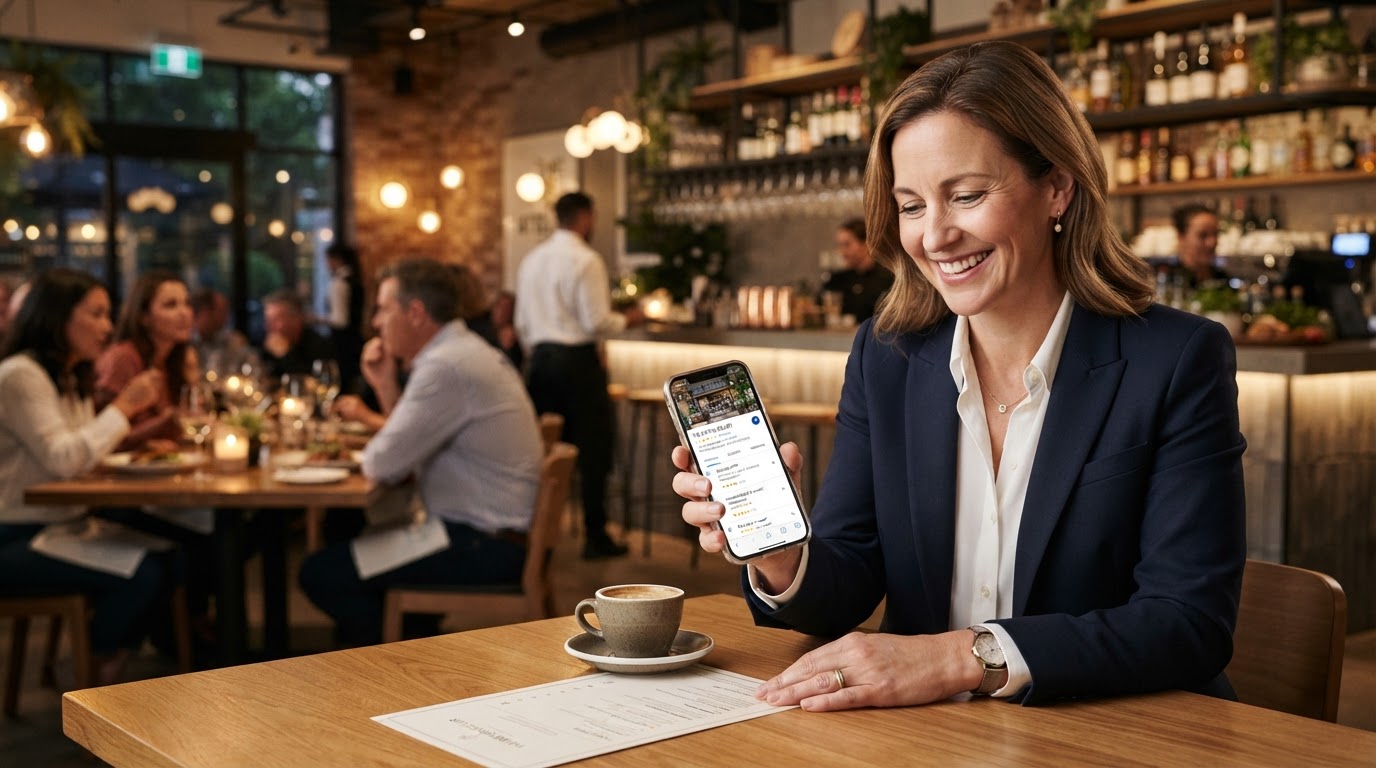
Getting more Google reviews is one of the simplest ways restaurants can build trust, improve their online reputation, and strengthen their local visibility.
But there's one problem.
Most restaurant owners aren't consistently asking customers to leave reviews.
It's not because they don't care.
It's because running a restaurant is busy.
Servers are taking orders, managers are handling problems, and owners have a hundred other things to worry about.
Asking for a Google review is usually the last thing on anyone's mind.
So what happens?
Restaurants serve hundreds or even thousands of customers, but only a small percentage leave reviews.
And that's a missed opportunity.
The good news is that in 2027, restaurants don't need to rely on employees remembering to ask.
They can automate the process.
Here's how.
1. Why Are Google Reviews So Important for Restaurants in 2027?
Think about what happens when someone searches for a restaurant they've never visited.
They might search Google for:
- Best pizza near me
- Greek restaurant in Huntington Beach
- Sports bars showing NFL games
- Best Italian restaurant for dinner
- Restaurants with good reviews near me
Before deciding where to eat, many customers look at the restaurant's Google rating, number of reviews, and what other people are saying.
Imagine two restaurants appear in the same search.
One has 300 reviews.
The other has 1,000 reviews.
If their ratings, location, and menus are similar, the restaurant with more credible, recent reviews may give customers greater confidence.
That doesn't mean the restaurant with more reviews will always win.
Customers also care about food quality, pricing, photos, convenience, and overall ratings.
But reviews can influence whether someone decides to visit.
Google also identifies review count and positive ratings as factors that can contribute to local search prominence.
More authentic reviews can support both customer trust and local search visibility.
2. The Biggest Mistake Restaurant Owners Make With Google Reviews
The biggest mistake isn't necessarily having bad reviews.
It's forgetting to ask for reviews in the first place.
Consider a restaurant that's been open for five years and has 300 Google reviews.
That's not automatically a bad number.
But if the restaurant serves dozens or hundreds of customers every week, there's an obvious question:
How many more customers might have shared their experiences if someone had simply asked?
Most people don't leave a Google review after every restaurant visit.
They eat their meal, pay, and continue with their day.
Even customers who had a great experience might never think about leaving feedback.
That's why waiting for reviews to appear naturally isn't much of a strategy.
Instead, restaurants should have a consistent, respectful way to invite customers to share their honest experiences.
3. How Can Restaurants Automatically Ask for Google Reviews?
One approach is to connect review requests to a restaurant's customer VIP program.
Here's how Sales Spike helps restaurants set this up.
Step 1: Invite Customers to Join Your VIP List
A restaurant might offer customers a small perk for joining its VIP program.
For example:
"Join our VIP list for a free dessert!"
Or:
"Sign up for restaurant updates and receive a special welcome offer."
The perk is for joining the VIP program, not for leaving a Google review.
Customers should understand what they're signing up for and provide the appropriate permission to receive texts.
Step 2: Send an Automatic Review Request the Next Day
After a customer signs up and visits, the restaurant can send an automated text the following day.
For example:
"Hey! Thanks for coming in yesterday. We really appreciate you supporting our small business! If you have a minute, we'd love to hear about your experience on Google. Here's the link. Thank you!"
That's it.
The message is short, friendly, and easy to understand.
It doesn't pressure the customer to leave five stars.
It simply asks them to share their experience.
Step 3: Make Leaving a Review Easy
The text includes a direct link to the restaurant's Google review page.
The customer doesn't have to search for the restaurant, scan a QR code, or navigate through several websites.
They can tap the link and leave a review if they choose.
The easier you make the process, the fewer unnecessary steps customers have to take.
Of course, sending a request doesn't guarantee someone will leave a review.
But it gives the restaurant a consistent way to ask.
4. Should Restaurants Follow Up If Customers Don't Leave a Review?
A respectful follow-up can make sense.
But restaurants shouldn't repeatedly message customers asking for reviews.
At Sales Spike, our standard approach is simple:
First request: The day after the customer's visit.
One reminder: Seven days later if the customer hasn't clicked the review link.
Then stop.
We don't believe in sending endless reminders.
Customers should always have the choice to leave a review or ignore the request.
It's also important to understand that tracking whether someone clicked a link doesn't necessarily tell you whether they actually posted a Google review.
Restaurants should configure their messaging carefully to avoid unnecessary reminders and respect opt-outs.
The goal isn't to annoy customers.
It's to give them a convenient opportunity to share feedback.
5. How Do You Ask for Google Reviews Without Sounding Annoying?
The secret is to make the message sound like something a real restaurant owner would say.
Not a corporate advertisement.
Not an aggressive sales pitch.
And definitely not a demand for five stars.
A simple message works well:
"Hey! Thanks for coming in yesterday. We really appreciate it. If you have a moment, leaving us an honest Google review would mean a lot to our small business!"
Why does this approach make sense?
Because it's personal.
It acknowledges the customer's visit.
It explains why feedback matters.
And it doesn't ask for anything unreasonable.
The restaurant is simply inviting the customer to share their experience.
That distinction matters.
Asking for a review isn't the same as pressuring someone to leave one.
Customers should feel comfortable sharing positive, neutral, or negative feedback.
6. Should Restaurants Ask Unhappy Customers for Google Reviews?
Restaurants should use a fair, consistent process for requesting reviews.
It's tempting to ask only customers who seem happy.
But selectively requesting reviews from satisfied customers while excluding unhappy customers can violate Google's policies against review gating.
A better approach is to invite customers to provide honest feedback regardless of whether their experience was positive or negative.
If someone had a poor experience, the restaurant should also try to resolve the issue directly.
Maybe their food arrived late.
Maybe their order was incorrect.
Maybe they were unhappy with the service.
Those situations deserve attention.
But restaurants shouldn't make access to a review request depend on whether someone is likely to leave a positive rating.
Similarly, offering free food, discounts, or other rewards in exchange for leaving a Google review is not permitted under Google's review policies.
A VIP signup incentive should remain separate from the review request.
Authentic feedback is more valuable than artificially inflated ratings.
7. Can AI Automatically Respond to Restaurant Google Reviews?
Yes.
And this is another way restaurant owners can save time.
At Sales Spike, we offer AI-powered Google review responses.
When a customer leaves a review, AI can help generate a response on behalf of the restaurant.
However, we recommend treating different ratings differently.
Two-Star Through Five-Star Reviews
Restaurants can configure AI to respond to these reviews automatically.
The responses should be relevant, professional, and appropriate to what the customer actually wrote.
For example, if someone compliments the pizza, the response should acknowledge that specific experience.
For critical two-star reviews, restaurant owners should still monitor the responses and consider stepping in personally when a complaint requires resolution.
One-Star Reviews
We recommend having the restaurant owner or manager respond personally.
Why?
Because a one-star review may involve a serious complaint.
Maybe the customer received the wrong food.
Maybe they had a problem with an employee.
Or maybe something happened that requires an apology and a direct conversation.
Those situations deserve a thoughtful response from someone who understands the business.
AI can help save time, but it shouldn't replace good judgment.
8. How Many Google Reviews Should a Restaurant Be Getting?
There's no universal number that every restaurant should target.
A small restaurant serving 30 customers a day is different from a busy location serving hundreds.
But restaurant owners should be asking themselves an important question:
Are we consistently inviting our customers to leave reviews?
If a restaurant has been open for years but receives only a few new reviews each month, there's likely room to improve its review-request process.
For some restaurants, aiming for an average of one new authentic review per day may be a useful internal goal.
That isn't a guaranteed result or a requirement for better rankings.
The more important measure is whether the restaurant is consistently requesting honest feedback and providing a customer experience worth talking about.
You can't force someone to leave a review.
But you can control whether you ask.
And that's the real advantage of automation.
9. How Google Reviews Fit Into a Restaurant's Local SEO Strategy
Google reviews are important, but they aren't the only factor that influences local visibility.
Restaurants should also pay attention to:
- Their Google Business Profile information and categories.
- Accurate business hours, address, and phone number.
- A mobile-friendly website.
- Clear menu and location information.
- Relevant website content and local SEO.
- Consistent business information across directories.
- Authentic, recent customer reviews.
Google describes local ranking in terms of relevance, distance, and prominence.
Reviews can contribute to prominence, but a restaurant cannot guarantee a top ranking simply by collecting more reviews.
That's why we recommend looking at the entire customer experience and online presence.
A restaurant with a strong website, accurate information, and a steady flow of genuine reviews is better positioned to earn customer trust.
10. Frequently Asked Questions About Google Reviews for Restaurants
How do restaurants get more Google reviews in 2027?
Restaurants can consistently ask customers for honest reviews through direct links, follow-up texts, and automated messaging systems. Making the process easy and keeping requests respectful can help.
Can restaurants automatically text customers asking for reviews?
Yes. With an appropriate messaging setup and customer consent, restaurants can automate review requests after a visit.
Is it okay to ask customers for five-star reviews?
Restaurants should request honest feedback rather than specifically asking for positive or five-star reviews.
Can I offer a free dessert in exchange for a Google review?
No. Offering an incentive in exchange for posting a Google review violates Google's policies. A separate VIP signup offer is different, provided it isn't conditioned on reviewing the business.
Do more Google reviews help restaurants rank higher?
Google says review count and positive ratings can help local ranking. However, rankings also depend on other factors, including relevance, distance, and prominence.
Should restaurants respond to negative reviews?
Yes. Thoughtful, professional responses show customers that the business takes feedback seriously. Sensitive complaints are often best handled personally by the owner or manager.
How often should restaurants ask for reviews?
A practical approach is to ask once after a visit and, if appropriate, send one respectful reminder. Avoid repeatedly contacting customers or requesting reviews in ways that violate platform policies.
Does AI automatically respond to Google reviews?
It can. Sales Spike offers AI-powered review responses, and we recommend personal owner or manager involvement for one-star complaints and other sensitive situations.
11. Stop Hoping Customers Leave Google Reviews. Start Asking.
Restaurant owners have a lot to manage.
Food costs.
Employees.
Customer service.
Marketing.
Daily operations.
Remembering to ask every customer for a Google review shouldn't have to be another manual task.
And here's the biggest takeaway:
You can't control whether a customer leaves a review, but you can control whether they receive a respectful invitation to leave one.
That's what automation makes possible.
Instead of hoping employees remember or waiting for customers to find your Google profile, you can create a consistent process.
At Sales Spike, we help restaurants automate review requests, follow up with customers, and manage review responses.
And it's just one part of our restaurant growth system.
For $249 per month, restaurants get four connected systems:
- A brand-new custom website.
- Automated missed-call text-back.
- Google review requests and AI-assisted responses.
- Text marketing to help bring customers back on slower days.
Get More Authentic Google Reviews Without Adding Work to Your Staff
Sales Spike helps restaurants automate personalized review requests, respectful follow-ups, and AI-assisted responses to positive reviews — all while building a valuable customer contact list. Included in the $249/month restaurant growth package.
See How Sales Spike WorksKeep Reading

How to Get More Google Reviews for Your Restaurant Without Asking Every Customer
October 19, 2026

Do Google Reviews Actually Help My Restaurant Get More Customers?
October 14, 2026
AI for Restaurants: How Restaurant Owners Can Stop Losing Customers and Increase Revenue
October 19, 2026
Want to see how this fits the bigger picture? Read about AI for restaurants, explore our restaurant website services, or check out Sales Spike pricing to see the full $249/month package.