How to Automate Google Reviews for Your Restaurant in 2027 (Complete Guide)
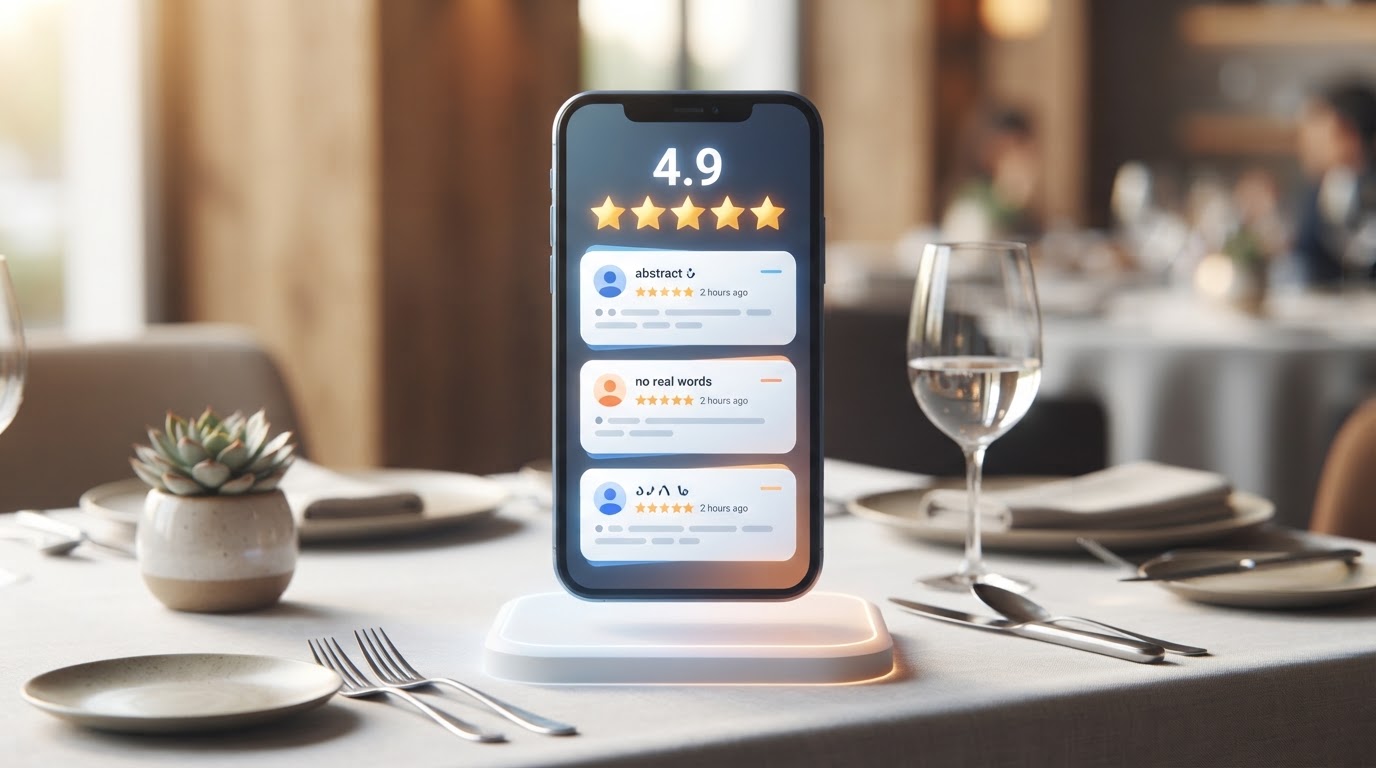
One of the biggest problems restaurant owners face isn't unhappy customers. It's that they forget to ask satisfied customers to share their experiences.
Many restaurant owners assume customers will automatically leave a review after a great meal. In reality, even customers who loved the food, the service, and the atmosphere often walk out the door without ever writing anything online.
A customer having a good time is not the same as a customer thinking, "I should go leave a Google review." Those are two different moments — and the second one rarely happens on its own.
That's why consistently inviting customers to leave honest feedback matters so much. A restaurant that asks regularly collects reviews. A restaurant that doesn't usually doesn't.
But asking every customer, every time, is hard to do manually. That's where restaurant Google review automation comes in. Automation doesn't replace good service. It removes the part most restaurants struggle with — remembering to ask.
In this guide, we'll walk through how restaurant Google review automation works in 2027, why it matters, and how it fits into a complete restaurant growth system.
1. Why Google Reviews Matter for Restaurants in 2027
Google reviews influence how customers discover restaurants and how they decide where to eat.
For most restaurants, Google is the first place a potential customer looks. They search, they see a list of nearby options, and they start comparing.
Here's what they're really comparing:
- How many reviews each restaurant has
- How recent those reviews are
- The overall rating
- What customers actually said about the food and service
- Whether the owner responds
Recent reviews carry weight. A customer reading feedback from the last few weeks gets a clearer sense of what the restaurant is like right now — not what it was like two years ago.
Google also says review count and positive ratings are among the factors that can contribute to local ranking. Reviews don't determine rankings on their own — relevance, distance, and prominence all matter — but they are part of the picture.
There's no universal "expiration date" after which a review stops helping. But a steady flow of fresh, authentic feedback is more useful than a handful of reviews from years ago.
Restaurants that consistently collect recent, honest reviews are in a stronger position than restaurants that rely on customers to remember on their own.
2. The Biggest Mistake Restaurants Make With Google Reviews
The most common mistake isn't asking the wrong customers. It's relying on employees to remember to ask at all.
Restaurant employees are busy. During a shift, they're focused on:
- Taking orders
- Serving customers
- Preparing or plating food
- Handling payments
- Cleaning and resetting tables
- Managing a full dining room
Asking for a Google review is rarely the most urgent thing happening in that moment. So it gets dropped — not because the team doesn't care, but because there's always something more immediate to handle.
That's why "just remind the staff to ask" tends to fall apart within a few weeks.
Automation removes that dependency. Instead of asking employees to remember, the restaurant builds a system that sends review requests automatically after a customer's visit — and sends a follow-up reminder when needed.
The staff no longer has to be the reason reviews do or don't happen.
3. How Automated Google Review Requests Work
Here's how a typical automated review request workflow looks.
Step 1: Collect Customer Contact Information
Before a restaurant can automate review requests, it needs a way to reach customers after they leave. The best time to collect a phone number is when the customer is already engaged — placing an order, checking out, or signing up for something.
For example, a restaurant might invite customers to join its customer list in exchange for a small complimentary dessert on a future visit.
One important distinction: the dessert is an incentive for joining the customer list — not for leaving a Google review. Offering a reward specifically in exchange for posting a review violates Google's review policies. Keep the two separate.
And remember that collecting a phone number for a receipt or order is not the same as consent for marketing messages. Customers should give appropriate consent for the messages they receive.
Step 2: Send the First Review Request
A good starting point is to send the first review request about 16–24 hours after a customer's visit, with 24 hours as the preferred default.
The timing works because the dining experience is still relatively fresh, but the customer is no longer in the middle of eating, paying, or heading home.
This is a practical recommendation, not a universally proven "best" time. The goal is simply to ask while the experience is still top of mind.
Here's an example of what that first message might look like:
"Hey, thanks for coming in yesterday. We really appreciate you stopping by. If you have a minute, we'd love to hear about your experience on Google: [Review Link]"
The message should feel friendly, natural, and personal — like it came from the restaurant, not a bot.
Step 3: Send One Follow-Up Reminder
Not every customer will leave a review after the first message. That's normal. A single, respectful reminder can help:
"Hey, just wanted to follow up and say thanks again for stopping by. If you haven't had a chance to leave us a Google review, we'd really appreciate your feedback: [Review Link]"
A few rules worth following:
- Don't send multiple reminders. One is enough.
- Don't deliberately add typos to disguise the message as a personally typed text.
- Don't send reminders to customers who have opted out.
- Don't claim the system can reliably detect whether someone already posted a review unless that capability is actually in place.
Step 4: Let the System Run Automatically
Once the workflow is set up, the system handles requests and follow-ups without manual effort from the staff.
That doesn't mean "set it and forget it" entirely. The restaurant should still monitor feedback, respond to reviews, and keep contact records accurate and up to date. The point is that the repetitive part — asking every customer, at the right time, every time — no longer depends on someone remembering.
4. Real Client Example: Ouzo & Feta in Huntington Beach
How Ouzo & Feta Generated 40+ Google Reviews in Less Than a Month
To see what this looks like in practice, here's a real example from Sales Spike's work with Ouzo & Feta, a restaurant in Huntington Beach, California.
We implemented a review campaign to help Ouzo & Feta consistently invite customers to leave feedback.
The reported results:
- More than 40 Google reviews generated during the campaign, in less than one month.
- Approximately two to three new reviews per day during the reported period.
- The month had not yet ended when these results were reported.
A steady flow of two to three reviews per day is the kind of consistency most restaurants want but rarely achieve by asking manually.
A few important notes:
- These figures are client-reported campaign results.
- We're not claiming the automation alone caused every single review — customers choose whether to write one.
- We're not inventing the restaurant's previous review count, and we're not claiming a specific revenue increase or ranking change.
- These results aren't a guarantee of what another restaurant will see.
What the example does show is that an organized, consistent review request system can support a restaurant's online reputation in a short period of time.
5. Why Consistent Reviews Are Better Than Occasional Review Campaigns
Some restaurants treat reviews like a project: every few months, the owner remembers, panics, and runs a big push to collect reviews.
That's better than nothing — but it's not the strongest approach.
Occasional campaigns create spikes of reviews followed by long gaps. A potential customer looking at the profile during one of those gaps sees little recent activity.
Consistency is better. A steady stream of recent reviews tells customers (and Google) that the restaurant is actively serving people and that feedback is a normal part of the experience.
Consistency also keeps the workload manageable. Sending a few requests per day is far less disruptive than launching a campaign every quarter.
The goal isn't a flood of reviews all at once. It's a reliable flow of authentic feedback that builds trust over time.
What a 2027 Google Review Automation System Includes
6. How AI Can Automatically Respond to Google Reviews
Collecting reviews is half the work. Responding to them is the other half.
Review responses matter because potential customers read them. When they see a restaurant that replies thoughtfully, it signals that the business is paying attention and cares about the experience.
Manually responding to every review is time-consuming, though — especially for a busy owner. That's where AI-powered review responses can help. Sales Spike uses AI to help restaurants manage review responses by:
- Thanking customers for positive feedback.
- Acknowledging the customer by name and referencing what they mentioned.
- Maintaining a professional, on-brand tone.
- Responding quickly instead of weeks later.
- Escalating serious complaints when appropriate.
The key principle: AI responses should never invent facts, promise unauthorized refunds, or argue with customers. They should be professional, accurate, and grounded in what the customer actually wrote.
Responding to Negative Reviews
Negative reviews should never be ignored — and they should never be handled defensively.
For most negative reviews, AI can draft a professional, empathetic response that acknowledges the customer's experience and invites a direct conversation.
Here's an example of what a professional response might look like:
"Thank you for taking the time to share this. We're sorry your experience didn't meet our standards, and we'd like the chance to make it right. Please reach out to us directly at [phone number] so we can look into what happened."
For one-star reviews and other serious complaints — a food safety concern, a serious service failure, or a staff issue — we recommend the owner or manager respond personally rather than relying on AI.
AI can save time. It shouldn't replace judgment on the reviews that matter most.
7. How Google Reviews Support Local SEO
Google reviews are one piece of a broader local SEO strategy. They work alongside:
- A well-maintained Google Business Profile with accurate hours, address, categories, and photos.
- Accurate, consistent business information across the web.
- A mobile-friendly restaurant website.
- Relevant local keywords in page titles, headings, and content.
- Internal links between a restaurant's menu, location, and service pages.
- Recent, authentic customer reviews.
Google describes local ranking in terms of relevance, distance, and prominence. Reviews can contribute to prominence, but no single tactic — including review automation — guarantees a specific position on Google Maps.
That's why we don't recommend treating reviews in isolation. A restaurant with accurate business information, a solid website, and a steady flow of genuine reviews is better positioned than one relying on any single tactic alone.
8. How Much Does Google Review Automation Cost in 2027?
The cost of Google review automation depends on the software, the number of locations, messaging volume, and which features are included.
There's a meaningful difference between standalone review request tools and complete reputation management systems:
- Standalone tools may handle review requests and little else.
- Complete systems handle requests, follow-ups, AI responses, customer list management, and integration with other marketing tools.
Some restaurant owners estimate that a single new review is worth somewhere in the range of $5–$10 to their business. That's a subjective valuation, not a verified market rate — the actual value depends on the restaurant, its location, and how reviews influence its bookings and orders.
Similarly, low-cost standalone automation may be available at various price points, but we can't claim $10–$20 is "the standard market price" without verified evidence.
The more useful question is about total value: how much time does the system save, how consistent is customer communication, how well do review responses get managed, and how does it integrate with the rest of the restaurant's marketing? A cheap tool that only sends texts may cost less up front but create more manual work in the long run.
9. Why Google Review Automation Should Be Part of a Complete Restaurant Growth System
Sales Spike doesn't just automate Google reviews. We connect review automation to a broader restaurant growth system so the pieces work together.
That system includes:
- Custom restaurant website design.
- Local SEO optimization.
- Automated Google review requests.
- Review follow-up automation.
- AI-powered review responses.
- Missed-call text-back automation.
- SMS marketing to bring customers back on slow days.
- Customer communication and lead capture.
Here's how these systems support one another:
A restaurant's website helps customers discover the business online. Google reviews help establish trust once they find it. Missed-call text-back helps the restaurant respond to inquiries they'd otherwise lose. SMS marketing helps the restaurant communicate with existing customers and encourage repeat visits.
Instead of juggling disconnected tools, Sales Spike connects these systems so they reinforce each other — and so the owner doesn't have to manage them all separately.
Our core restaurant growth system is available for $249 per month, subject to the current published offer. Optional add-ons aren't automatically included unless the website confirms they are.
10. Common Mistakes Restaurants Should Avoid
As you build or evaluate a review automation system, watch for these common mistakes:
- Forgetting to ask customers for reviews at all.
- Sending too many follow-up messages.
- Ignoring negative reviews instead of responding thoughtfully.
- Using generic or inappropriate AI responses that don't fit the review.
- Offering rewards specifically for positive reviews (which violates Google's policies).
- Buying fake reviews.
- Only asking happy customers for reviews (review gating).
- Failing to maintain SMS consent records.
- Assuming review automation alone guarantees higher Google rankings.
Following Google's review policies and applicable messaging laws isn't optional. Review requests should be neutral and available to every customer — regardless of whether their experience was positive or negative.
Stop Chasing Google Reviews. Start Automating Your Restaurant's Reputation.
Restaurant owners should focus on providing excellent customer experiences — and let a reputation management system handle the consistent work of requesting feedback and managing responses.
Chasing reviews is exhausting. Automating them is efficient.
When the asking, the follow-ups, and the responses run consistently in the background, reviews stop being a project and start being a system.
And Google review automation isn't an isolated tool. It's one part of a complete restaurant growth system — alongside a well-built website, local SEO, missed-call text-back, and SMS marketing.
Sales Spike helps restaurants bring these pieces together so they reinforce each other, instead of leaving the owner to manage a dozen disconnected tools.
See How Sales Spike Automates Your Restaurant's Growth
Want to see how our system works? Visit our contact page, fill out the short form, and watch a video where we walk you through a real client's account and show you exactly how Sales Spike helps restaurants get more Google reviews, capture missed calls, and bring customers back on slow days.
See How It WorksFrequently Asked Questions
How can restaurants get more Google reviews in 2027?
Restaurants get more Google reviews by consistently asking customers for honest feedback after their visit. Automated review request systems make this easier by sending personalized requests and a single respectful follow-up, so the process doesn't depend on employees remembering.
Can Google review requests be automated?
Yes. With appropriate customer consent, restaurants can automate review requests through SMS or email after a customer visits, places an order, or joins the restaurant's customer list.
When should restaurants send Google review requests?
A practical starting point is 16–24 hours after a customer's visit, with 24 hours as the preferred default. The dining experience is still fresh, but the customer is no longer busy eating or paying.
How many review reminders should restaurants send?
One. Send the initial request, and if the customer hasn't left a review, send a single respectful follow-up. Avoid repeated messages, and never message customers who have opted out.
Can AI automatically respond to negative Google reviews?
AI can draft professional, empathetic responses to negative reviews, but serious complaints — like one-star reviews involving service or safety — should typically be handled personally by the owner or manager. AI responses should never invent facts, promise refunds, or argue with customers.
Do Google reviews help restaurants rank higher on Google?
Google says review count and positive ratings can contribute to local ranking, but rankings also depend on relevance, distance, and prominence. No single tactic — including review automation — guarantees a specific ranking.
How much does Google review automation cost?
Costs vary based on the software, number of locations, messaging volume, and features. Standalone tools may cost less, while complete reputation management systems include requests, follow-ups, AI responses, and integration with other marketing tools. Sales Spike includes review automation in its $249/month restaurant growth system.
Can restaurants offer customers incentives for Google reviews?
No. Offering a reward in exchange for leaving a Google review violates Google's policies. A separate incentive for joining a customer list is different, provided it isn't conditioned on leaving a review.
What is the best way to manage restaurant Google reviews?
Use a consistent, automated system to request honest reviews from every customer, follow up once when appropriate, respond to reviews professionally (with AI or personally for serious complaints), and keep business information accurate across the web.
Keep Reading
How Can Restaurants Get More Google Reviews Without Annoying Customers in 2027?
November 2, 2026

How to Get More Google Reviews for Your Restaurant Without Asking Every Customer
October 19, 2026

How Can My Restaurant Show Up on ChatGPT and Google AI in 2027?
November 2, 2026
Want to see how this fits the bigger picture? Read about getting more Google reviews without annoying customers, explore our restaurant marketing automation services, or check out Sales Spike pricing to see the full $249/month package.